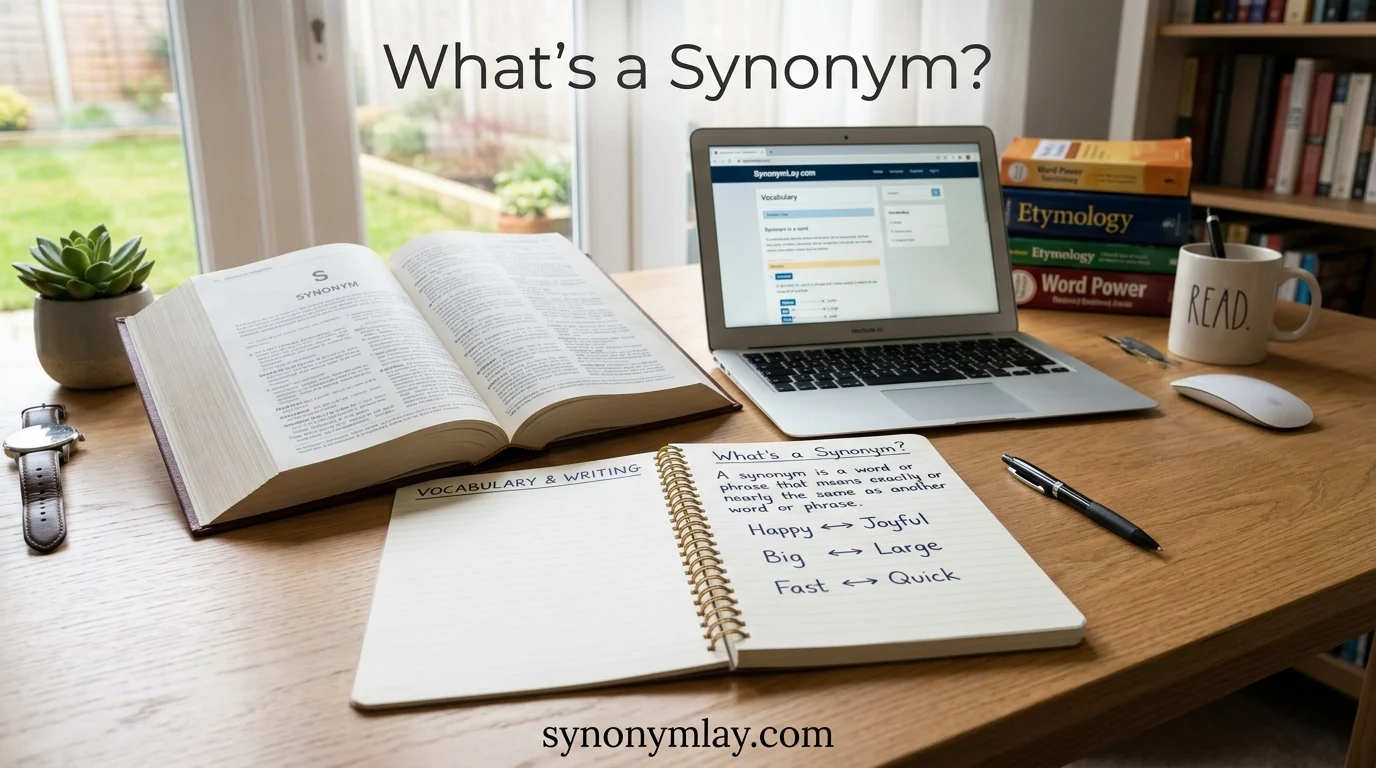
If you have ever asked, “What’s a synonym?”, you are asking about a word that has the same or nearly the same meaning as another word. Synonyms help us make our writing more interesting, avoid repetition, and choose words that express the exact tone we want.
For example, instead of repeatedly using the word demure, you can choose words such as modest, reserved, shy, or unassuming, depending on the meaning and situation. However, synonyms are not always perfect replacements. Each word can have a slightly different feeling, level of formality, or usage.
In this guide, we will explain what demure means in simple English and explore 30 useful synonyms. Each synonym includes an easy definition, an example sentence, and a quick note about when it works best.
What Does “Synonym” Mean?
A synonym is a word that has the same or a similar meaning as another word.
For example:
- Happy → joyful, cheerful, delighted
- Big → large, huge, enormous
- Smart → clever, intelligent, bright
- Quiet → silent, peaceful, still
Synonyms are useful because they give you more choices when speaking or writing.
However, two synonyms may not be completely interchangeable. A word can carry a different emotional meaning or fit better in a particular context.
What Does “Demure” Mean?
Demure describes someone who is quiet, modest, reserved, and usually not interested in attracting attention.
It is often used to describe a person’s appearance, behavior, or manner. The word can suggest calmness and modesty, although the exact feeling depends on the context.
Simple meaning:
Someone who is demure behaves in a quiet, modest, and reserved way.
Example:
She gave a demure smile when everyone complimented her.
The word can sound somewhat formal or literary, so everyday alternatives such as shy, quiet, modest, or reserved may sometimes sound more natural.
30 Synonyms of Demure
1. Modest
Meaning: Not showing off and behaving in a simple, respectful way.
Example:
She was modest about her success.
Best usage context: Use modest when you want to emphasize humility or a lack of self-promotion.
2. Reserved
Meaning: Quiet and not likely to openly express feelings or opinions.
Example:
He is reserved when meeting new people.
Best usage context: Best for someone’s personality, behavior, or communication style.
3. Shy
Meaning: Nervous or uncomfortable around other people, especially strangers.
Example:
The shy girl avoided speaking in front of the class.
Best usage context: Use it when someone lacks confidence in social situations.
4. Unassuming
Meaning: Not trying to appear important, impressive, or special.
Example:
Despite her success, she remained completely unassuming.
Best usage context: Excellent for describing humble people who do not seek attention.
5. Retiring
Meaning: Quiet and avoiding attention or social activity.
Example:
His retiring nature made him prefer small gatherings.
Best usage context: More formal; useful for describing a quiet personality.
6. Quiet
Meaning: Making little noise or speaking very little.
Example:
She was quiet during the entire meeting.
Best usage context: A simple everyday alternative when you want to emphasize silence or calm behavior.
7. Bashful
Meaning: Easily embarrassed or shy, especially when receiving attention.
Example:
He became bashful when his friends praised him.
Best usage context: Useful for a gentle, slightly playful description of shyness.
8. Coy
Meaning: Pretending to be shy, modest, or uncertain, often in a playful way.
Example:
She gave a coy smile before answering his question.
Best usage context: Often used when someone is deliberately acting shy or playful.
9. Timid
Meaning: Lacking confidence and easily frightened or nervous.
Example:
The timid student hesitated before answering.
Best usage context: Use when shyness is connected to fear or lack of confidence.
10. Unobtrusive
Meaning: Not attracting attention or causing disturbance.
Example:
He chose an unobtrusive seat at the back of the room.
Best usage context: Useful for people, objects, or actions that remain unnoticed.
11. Gentle
Meaning: Kind, calm, and not harsh or aggressive.
Example:
She had a gentle manner when speaking to children.
Best usage context: Best when you want to emphasize kindness and softness rather than shyness.
12. Mild
Meaning: Calm, gentle, and not extreme.
Example:
He has a mild personality and rarely gets angry.
Best usage context: Use for a calm personality or behavior.
13. Meek
Meaning: Very quiet, gentle, and unlikely to argue or challenge others.
Example:
The meek student rarely spoke during discussions.
Best usage context: Use carefully because meek can suggest excessive passiveness or lack of confidence.
14. Subdued
Meaning: Quiet, restrained, or less energetic than usual.
Example:
She gave a subdued response to the unexpected news.
Best usage context: Good for moods, behavior, voices, or reactions.
15. Demure
Meaning: Quiet, modest, and reserved in appearance or behavior.
Example:
She wore a simple dress and maintained a demure manner.
Best usage context: Use when describing modest or reserved behavior, especially in formal or literary writing.
16. Dignified
Meaning: Calm, serious, and worthy of respect.
Example:
She remained dignified despite the criticism.
Best usage context: Best when modest behavior is connected with self-respect and composure.
17. Discreet
Meaning: Careful not to attract attention or reveal private information.
Example:
He was discreet about his personal life.
Best usage context: Use when privacy, tact, or avoiding unnecessary attention is important.
18. Unpretentious
Meaning: Simple and not trying to appear more important or impressive than you are.
Example:
The famous writer was surprisingly unpretentious.
Best usage context: Excellent for humble people, lifestyles, places, or things.
19. Humble
Meaning: Not believing that you are better or more important than others.
Example:
She stayed humble after winning the award.
Best usage context: Use when the focus is on a person’s attitude toward success or achievement.
20. Modest-Mannered
Meaning: Behaving in a quiet, respectful, and unshowy way.
Example:
The modest-mannered guest thanked everyone politely.
Best usage context: Useful when describing someone’s polite and restrained behavior.
21. Unobtrusive
Meaning: Designed or behaving in a way that does not attract attention.
Example:
Her unobtrusive style made her comfortable at formal events.
Best usage context: Particularly useful when emphasizing a lack of attention-seeking behavior.
22. Self-effacing
Meaning: Avoiding praise or deliberately making yourself seem less important.
Example:
His self-effacing humor made everyone feel comfortable.
Best usage context: Strong choice for someone who downplays their own achievements.
23. Unpretending
Meaning: Natural, sincere, and without an attempt to impress others.
Example:
Her unpretending personality made her easy to trust.
Best usage context: Useful in descriptive or literary writing.
24. Soft-Spoken
Meaning: Speaking quietly and gently.
Example:
The soft-spoken teacher explained the lesson patiently.
Best usage context: Best when the person’s voice or speaking style is the main focus.
25. Unassertive
Meaning: Not forceful about expressing opinions, needs, or demands.
Example:
His unassertive nature sometimes made it difficult for him to say no.
Best usage context: Use when someone does not strongly push their opinions or wishes.
26. Introverted
Meaning: More comfortable spending time alone or in small groups than in large social situations.
Example:
She is introverted and enjoys reading alone.
Best usage context: Use for personality traits, but remember that being introverted does not necessarily mean being shy or demure.
27. Bashful
Meaning: Shy or easily embarrassed when receiving attention.
Example:
The bashful child hid behind her mother.
Best usage context: Especially suitable for situations involving praise, compliments, or attention.
28. Peaceful
Meaning: Calm and free from disturbance or conflict.
Example:
He has a peaceful and relaxed personality.
Best usage context: Better when describing calmness rather than modesty specifically.
29. Restrained
Meaning: Controlled and not overly emotional, expressive, or energetic.
Example:
Her restrained response showed how carefully she chose her words.
Best usage context: Good for formal writing and situations involving controlled emotions or behavior.
30. Composed
Meaning: Calm and in control of your emotions.
Example:
She remained composed during the difficult conversation.
Best usage context: Best when someone stays calm and controlled under pressure.
Quick Comparison of Demure Synonyms
| Synonym | Main Idea | Tone | Best Used For |
|---|---|---|---|
| Modest | Not showing off | Neutral | Behavior, achievements |
| Reserved | Emotionally quiet | Neutral | Personality |
| Shy | Social nervousness | Casual | People |
| Unassuming | Not seeking importance | Positive | Personality |
| Bashful | Easily embarrassed | Gentle | Social situations |
| Coy | Playfully shy | Playful | Behavior or expressions |
| Timid | Lacking confidence | Negative/neutral | Personality |
| Dignified | Calm and respectable | Formal | Behavior |
| Humble | Not boastful | Positive | Achievements |
| Discreet | Avoiding attention | Formal | Privacy |
| Soft-spoken | Quiet voice | Positive | Speech |
| Restrained | Controlled | Formal | Emotions or reactions |
| Composed | Calm under pressure | Positive | Difficult situations |
| Self-effacing | Downplaying oneself | Positive | Personality or humor |
Demure vs. Modest
Demure and modest are closely related, but they are not exactly the same.
Demure usually focuses on a person’s quiet, reserved, or restrained appearance and behavior.
Modest can refer to behavior, clothing, achievements, opinions, or lifestyle.
Example:
- She had a demure manner.
- She was modest about her accomplishments.
Demure vs. Shy
A shy person may feel nervous or uncomfortable around other people.
A demure person appears quiet, reserved, and modest. Demure does not necessarily mean the person feels nervous.
Example:
She was demure during the formal ceremony.
This does not automatically mean she was afraid or socially anxious.
Demure vs. Reserved
Reserved is one of the closest everyday alternatives to demure.
A reserved person usually does not reveal many emotions or personal thoughts. Demure can also suggest modesty and a particular manner of appearance or behavior.
Demure vs. Coy
These words can sometimes overlap, but coy often suggests intentional or playful shyness.
For example:
She gave a coy smile.
This can suggest that she was deliberately acting shy or teasing.
By contrast:
She had a demure manner.
This usually sounds more restrained, modest, and formal.
How to Choose the Right Synonym
Choosing the right synonym depends on what you actually want to communicate.
When You Mean “Not Showing Off”
Choose:
- Modest
- Humble
- Unassuming
- Unpretentious
- Self-effacing
These words work well when describing someone who does not boast about achievements.
When You Mean “Quiet”
Choose:
- Quiet
- Reserved
- Retiring
- Soft-spoken
- Subdued
These are useful when the main idea is calm or limited communication.
When You Mean “Shy”
Choose:
- Shy
- Bashful
- Timid
- Coy
These words are better when social discomfort or shyness is important.
When You Mean “Calm and Controlled”
Choose:
- Composed
- Restrained
- Dignified
- Mild
- Gentle
These work especially well in formal writing.
When You Mean “Avoiding Attention”
Choose:
- Discreet
- Unobtrusive
- Unassuming
- Reserved
These emphasize keeping a low profile.
How to Use Demure in a Sentence
Here are several natural examples:
- She gave a demure smile when she received the compliment.
- Her demure personality made her seem calm and reserved.
- The character was portrayed as quiet and demure.
- She chose a demure style for the formal occasion.
- His demure manner contrasted with his confident professional skills.
Common Mistakes When Using Synonyms
One common mistake is assuming that every synonym can replace the original word in every sentence.
For example, shy and demure are related, but they communicate different ideas.
Another mistake is ignoring tone. Meek can sound negative because it may suggest weakness, while humble is usually positive.
It is also important to consider formality. Words such as demure, retiring, dignified, and self-effacing may sound more formal than everyday words such as quiet or shy.
Why Synonyms Matter for Students and Writers
Knowing synonyms can make your vocabulary much stronger.
For students, synonyms can help improve essays, assignments, presentations, and reading comprehension.
For ESL learners, understanding subtle differences between similar words makes communication more natural.
For writers, synonyms help avoid repetition and create a more precise tone.
Instead of simply asking, “What’s a synonym?”, it is often better to ask:
“Which synonym fits my sentence best?”
That small difference can lead to much better writing.
Frequently Asked Questions
What’s a synonym?
A synonym is a word that has the same or a similar meaning as another word. For example, happy, joyful, and cheerful are synonyms.
What is the best synonym for demure?
Modest and reserved are two of the closest common synonyms for demure, but the best choice depends on the sentence.
Is shy a synonym for demure?
Shy can sometimes be used as a synonym for demure, but the meanings are not identical. Shy usually involves nervousness or discomfort, while demure emphasizes modest and reserved behavior.
Is demure a positive word?
Usually, demure has a neutral or positive meaning when describing someone as modest, quiet, or reserved. However, the meaning can change slightly depending on context.
What is the opposite of demure?
Possible opposites include bold, outgoing, outspoken, assertive, flashy, and attention-seeking, depending on the intended meaning.
Final Thoughts
So, what’s a synonym? It is a word with the same or a closely related meaning as another word. Learning synonyms gives you more control over your vocabulary and helps you communicate ideas more precisely.
For demure, useful alternatives include modest, reserved, shy, unassuming, bashful, retiring, dignified, humble, discreet, and composed. But remember that these words are not identical. The best synonym depends on whether you want to express modesty, shyness, calmness, humility, privacy, or restraint.
The more you understand these subtle differences, the easier it becomes to choose words that sound natural and communicate exactly what you mean.

I am Camila Marie, a passionate writer who loves exploring synonyms and making language simple, clear, and engaging. I enjoy helping readers discover better words and express their ideas confidently.